


Peru's Timeless Treasures: A Journey Through Ancient, Intact Monuments
- Tripsly

- Sep 8, 2024
- 3 min read
Peru is an enchanting land where history is carved into its stunning landscapes, and ancient civilizations have left enduring legacies. For travelers eager to step back in time, Peru offers a treasure trove of archaeological wonders that reveal the ingenuity, spirituality, and artistry of its early cultures. In this article, we'll explore three of the most significant and intact ancient monuments in Peru: Machu Picchu, the Nazca Lines, and Chavín de Huántar. Each site, with its unique historical significance, invites visitors to delve into a world where the past is vividly alive.
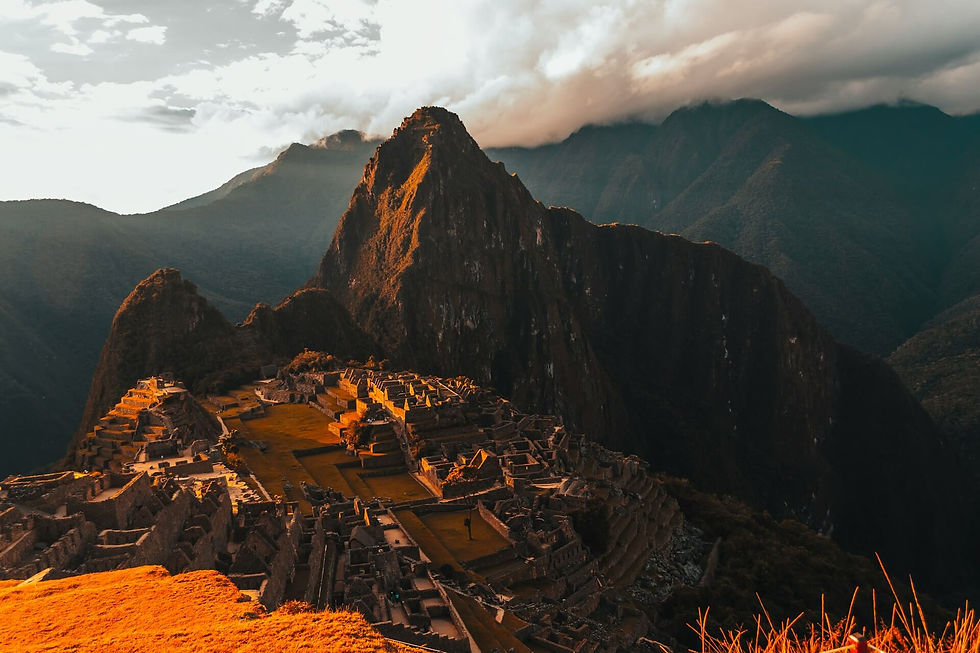
Machu Picchu: The Incan Masterpiece
High in the Andes, shrouded in mist and mystery, lies Machu Picchu—the crowning jewel of Incan civilization. Built in the 15th century during the reign of the Inca emperor Pachacuti, this ancient citadel remained hidden from the world until its rediscovery by Hiram Bingham in 1911. Today, it stands as a UNESCO World Heritage site and one of the New Seven Wonders of the World.
Historical Significance and Architectural Genius
Machu Picchu, believed to be a royal estate or sacred religious site, showcases the Inca's architectural prowess and their deep connection to nature. Set on a mountain ridge 2,430 meters above sea level, the site's precision-cut stone structures, including temples, terraces, and royal quarters, reflect advanced engineering skills. The layout of the site takes advantage of the natural topography, integrating seamlessly with the surrounding landscape.
Exploring the Citadel
To experience Machu Picchu’s full magic, plan to arrive early to witness the sunrise casting golden rays over the verdant peaks. You can trek the classic Inca Trail, a rigorous yet rewarding four-day hike, or opt for the scenic train ride from Cusco to Aguas Calientes, followed by a short bus journey to the site. Be sure to explore iconic sites like the Temple of the Sun, the Room of the Three Windows, and the Intihuatana stone—believed to be an ancient astronomical clock.
The Nazca Lines: Mysterious Desert Artistry
Across the arid plains of southern Peru, the Nazca Lines spread out like a giant puzzle in the sand. These enormous geoglyphs were created by the Nazca culture between 500 BCE and 500 CE and consist of hundreds of figures, ranging from geometric patterns to stylized animals and plants.
Theories and Interpretations
The purpose and meaning of the Nazca Lines are subjects of enduring speculation. Some archaeologists suggest they had astronomical or calendrical functions, while others propose they were part of ritualistic water ceremonies, integral to life in the harsh desert climate. The only certainty is the sheer scale of the undertaking, which suggests they were immensely significant to their creators.
How to See the Nazca Lines
To truly appreciate the grandeur of these geoglyphs, take a flight from the town of Nazca or Pisco. An aerial view reveals intricate designs like the hummingbird, spider, and monkey—visible only from above. For those wishing to stay grounded, the observation tower along the Pan-American Highway offers views of three primary figures.
Chavín de Huántar: The Spiritual Heart of the Andes
Nestled in the Andes, Chavín de Huántar predates the Incan empire and was a central hub of the Chavín culture, which flourished from 900 to 200 BCE. This archaeological site served as a key religious, political, and cultural center, influencing many Andean civilizations that followed.
Spiritual and Architectural Insights
The site is renowned for its maze-like passages and impressive stonework. At its heart is the Templo Mayor, a massive temple that housed the Lanzón, a stone monolith that likely served as a ceremonial focal point. The carvings, featuring intricate anthropomorphic and zoomorphic designs, reveal much about the Chavín's religious beliefs and artistic achievements.
Visiting Chavín de Huántar
Today, visitors can explore the remains of this once-great civilization with a guided tour, which offers insights into the society's complex social hierarchy and spiritual practices. Standing in the Plaza Mayor, one can almost hear the echoes of priests and pilgrims who once filled this sacred site with rituals and offerings.
A visit to these ancient sites in Peru is a journey through time, offering a glimpse into the lives and beliefs of the people who shaped these monuments. From the formidable heights of Machu Picchu to the mysterious Nazca Lines and the spiritual mystery of Chavín de Huántar, each site offers a unique narrative of human achievement. Peru's monumental legacies are invitations to explore, reflect, and be inspired by the richness of its past.

Comments